Growing Your Franchise Through Engagement

by Michelle Hummel

Engagement has been the buzzword in the digital marketing landscape for nearly a decade and with good reason. While there are many technical definitions, at its core, engagement is just another word for conversation. Basically, it’s what puts the social in social media, and now in the time of physical distancing, engagement is more important than ever. 

A recent article in The New York Times, “The Virus Changed the Way We Internet,” cites sources showing Facebook traffic is up 27 percent since February 29, when Covid-19 was being first being recognized as a serious matter. Even though the country is re-opening, most people are more comfortable virtually interacting instead of physicallyAny business can benefit from this by engaging with your current and potential customers. 

Content Is King 

Before enacting an engagement strategy, the first step is a content plan. Think of content as the media in social media. Your business needs to post well-planned and well-executed content every day. Not only does this help your customers know what’s going with your business, but the potential customers you plan to engage with will check out your pages before speaking with you.  

A well-planned content strategy includes a mix of information about your products, highlighting the human element of your business, giving inspiration and posting thought-provoking ideas. Think for a moment about the last show you watched on television. Ads were placed in between the content – not the other way around. Your social media content strategy needs to flow the same way.  

Now let’s consider the well-executed part of your strategy. Every post needs an accompanying image taken in good lighting at a minimum, if not professionally taken, or from a stock service. The text needs to be free of grammatical errors and misspellings and needs to consider the many ways it could be interpreted, as well as its tone and timing. If your content misses the mark, your business could quickly go viral in a negative way. 

Inbound Engagement 

This is simply business gold. Inbound engagement is when customers reach out to you directly. Whether they’re commenting on a post or asking direct questions, it’s important to respond promptly – and take it up a step. If a customer comments with an emoji, give them two back. If they leave a positive comment, thank them and ask them a question back. You could also show your sense of humor by thanking them and including an appropriate gif. The more customers engage with your page, the more the social media platforms’ algorithms will continue delivering posts to them, allowing your business to stay top of mind. 

Outbound Engagement 

After you’re experienced with inbound engagement, it’s time to extend your circle. Think of outbound engagement as dating for a moment. If a stranger approaches you and immediately asks for a date, you’d probably turn them down. However, if you get to know someone first, you’re more likely to agree to the date when they do ask. Social media works the same way. Start by building a lead list of potential customers. This isn’t possible for B2C customers on Facebook, but it works there for B2B. B2C and B2B outbound engagement works on all other social media platforms. Once you have your lead list, build the relationship by liking one or two of their posts. Another week leave a comment or retweet them. Another week ask a question about their post. Now that you’ve built the relationship, go ahead and take it to the next level by DMing them one of your blogs you’d think they’d be interested in and asking for their feedback.   

Engagement is time-consuming, but its benefits will increase your bottom line by attracting new customers and reinforcing your brand loyalty with current customers, especially in this time of physical distancing. 
Paycheck Protection Program – Maximize Forgiveness

by Tom G. Porterfield, CPA, CFE

It is important that small businesses receiving the Paycheck Protection Program (PPP) loans manage the loan proceeds. For that reason, we are sharing some best practices for managing PPP loans. 

Payroll and Full Time Equivalents (FTEs) 

PPP loans are forgivable, but reductions in employees, work hours and total payroll decrease the forgiveness. To manage this, recipients determine the baseline FTE and payroll amounts to calculate the forgiveness. 

This requires the average FTEs for the periods: 

  • February 15, 2019 to June 30, 2019 for Option 1 and 
  • January 1, 2020 to February 29, 2020 for Option 2. 

The other baseline is the total allowable payroll for the most recent quarter prior to the loan origination. You will need to gather the payroll expenses for employees during that first quarter. Track payroll expenses during the â€œcovered period” by employee excluding employees earning over $100,000 annualized. The covered period has now been revised allowing recipients to choose an 8-week or 24-week period. 

Because the recipients must spend no less than 60% of the loan proceeds on payroll, it is important to track and monitor this from the start. 

Start by asking your payroll provider or CPA to help you gather this information.  

Segregate PPP Proceeds 

Open a new bank account to deposit and manage the PPP loan proceeds. Then pay the allowable expense from your existing bank accounts and transfer the funds from the PPP account to cover the expenses. This is important because the balance left in the PPP account should approximate the unforgivable balance at the end of the covered period. 

Maintain 8-Week and 24-Week PPP Projections and Logs 

Because recipients have the option of choosing 8 weeks or 24 weeks from the loan origination date to make the allowable expenses, it is important to project allowable expenses. 

Project and track the allowable expenses as actual expenditures are made over the 8 and 24week periods. Setup a folder to save the reports and invoices supporting payroll, group health care benefits, retirement and other allowable expenditures. 

Communication 

Because the PPP loans are new, it is important to communicate with your banker throughout the expenditure period. It’s also important to understand the banker’s expectations for this process. Also keep abreast of any changes or clarifications of the PPP loan process. 

Taxability of the PPP Forgiveness 

There is a saying – “It’s better to ask for forgiveness than permission.” When it comes to the PPP loans, forgiveness is written into the CARES Act. This forgiveness is specifically exempted from federal income taxes. Sounds like a great deal, and it really is. 

It appears that someone reached out to the IRS and asked for permission. And while the IRS did not kibosh the tax free forgiveness, they clarified the deductibility of the related expenses in Notice 2020-32.

 While you are not taxed on the forgiveness, you can’t deduct the expenses paid by the forgivable portion of your PPP loan. 

So some think of this as bad news. It’s really a neutral event from a tax standpoint. Recipients are not taxed on the forgiveness on one side of the equation. On the other side, the related expenses are not deductible. So in the end, the tax effect of the PPP forgiveness is tax neutral. 

Accounting for the PPP Forgiveness 

Recipients should record the forgiveness to an easily recognizable account on the income statement. Do this to ensure that it is not taxable on your 2020 tax returns. 

Yeah, this a little technical for most of us. Here’s what you need to do. 

  • Record the forgiveness in a separate “Other Income Account” 
  • Work with your CPA specifically identifying the forgivable portion of the PPP loan. 
  • Review the M-1 section of your return reconciling your book income to the taxable income. 
  • Verify the forgiveness is removed from the book income (Line 5a Income recorded on books this year not included on Schedule K, lines 1 through 10), and 
  • Verify the same amount is added back to book income (Line 3a Expenses recorded on books this year not included on Schedule K, Line 1 through 12 and 14p). 

The Remaining PPP Balance 

The balance of the PPP loan at the end of the 8 or 24week covered period converts to a 2-year term loan at a 1% interest rate. Payments on your PPP loan are deferred for 6 months from the loan origination date. 

There is no prepayment penalty on the PPP loan. For that reason, recipients should consider how they will handle the unforgivable portion of the loan now in forecasting long-term cash flow. 

Summary of the PPP Best Practices 

First, understand the PPP loan forgiveness formula. Secondly, manage your expenditures during the 8 or 24 Week covered period to maximize the forgiveness. Then follow these steps: 

  1. Gather the FTE and Payroll information for the baselines noted above. 
  1. Segregate the proceeds in a separate bank account. 
  1. Transfer funds to operating and payroll bank accounts as allowable expenditures are incurred. 
  1. Create and maintain a projection of allowable expenditures. 
  1. Update the projection as allowable expenditures are incurred. 
  1. Scan and save supporting reports and invoices in a central folder to support the loan forgiveness calculation. 
  1. Record the forgiveness to a separate “Other Income” account. 
  1. Work with your CPA and review the 2020 M-1 Schedule ensuring the forgiveness is not taxable nor, the related expenses are not deducted. 

Finally, follow these steps to maximize the loan forgiveness and create liquidity during this difficult business cycle. 

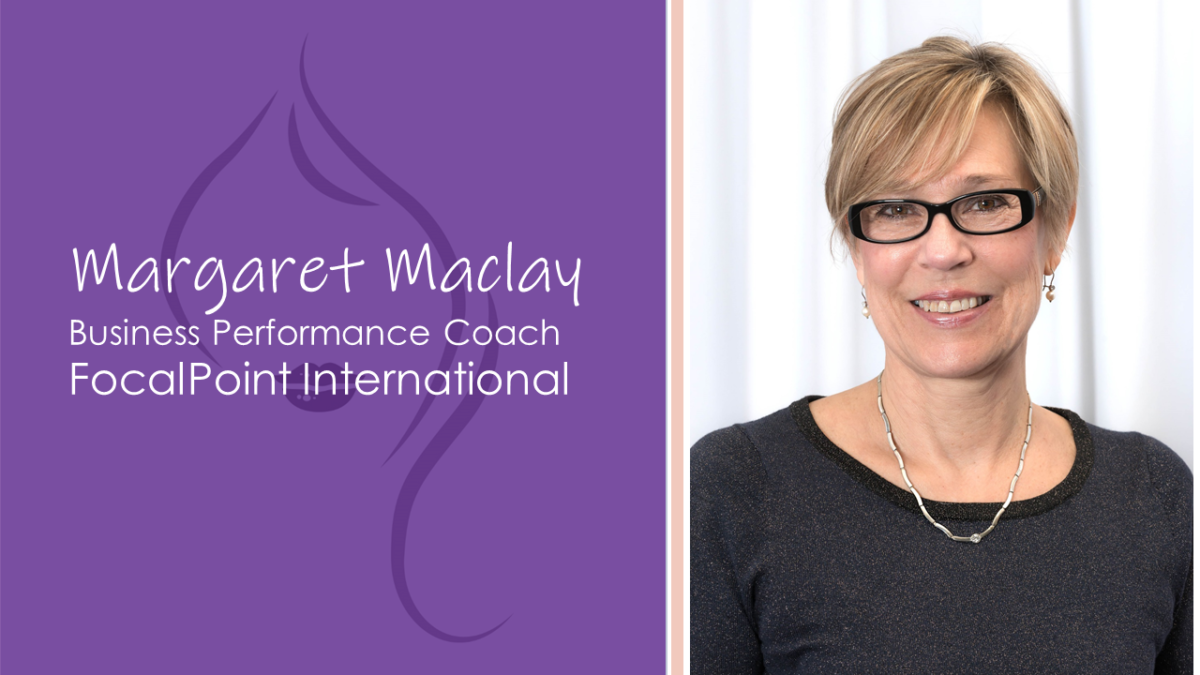
Where Passion and Purpose Collide – Margaret Maclay

On today’s episode, we interview Margaret Maclay of FocalPoint Business Coaching. She discusses her path to success and how to promote leadership and accountability in business. On Women in the Know, Rebecca and Elizabeth offer best techniques to keep people accountable. On Ask Beck and Liz, we answer the question, “Why do people not to what they are supposed to do?” We would love to hear your feedback in the comments!

Follow us on YouTube.

Follow us on Spotify.

Join The Coterie for Women today!

Meet Margaret Maclay, Director, FocalPoint Assessment Center

Margaret Maclay has been a professional business coach and trainer for more than12 years. She has worked with business owners, leaders and teams world-wide, in areas of communication, talent management, process improvement, customer service and strategic planning, to achieve peak performance. Additionally, she holds positions in the FocalPoint organization as the Director of Onboarding, Certification and Support, Director of the Assessment Center, Certification Trainer and Coach Practice Mentor. Maclay has served on a variety of local Advisory Boards for profit and non-profit organizations, mentors high school students and is a sought after keynote speaker. The ability to assist her clients and organizations to identify faster, smarter, better ways of doing things has resulted in numerous related awards and special recognitions, including FocalPoint’s Campbell Fraser award for Coaching Excellence. Prior to joining the FocalPoint Team, Maclay spent 25 years in the Apparel Industry and held a variety of global leadership positions.


From Dreamer to Business Owner

by  Elizabeth Denham

Carolyn Thurston is a self-described dreamer. From a young age, she had a strong faith, a relentless desire to help people and the gumption to find a way to succeed. That gumption led her to her position as Founder and CEO of Wisdom Senior Care, an emerging franchise, and President and CEO of Wisdom Health Academy, a state-approved nursing school in Durham, North Carolina.

“In 11th grade, God gave me the idea and a name – ‘Wisdom,’” Thurston said. “I told my mother, and she said, ‘Girl, you can do it!’”

After going to school for sociology, she had a burning desire to get her nursing degree. She worked in a hospital for a time and then went to work in home health care always knowing she wanted to start her own business. 

In 2005, she had a dream, but she didn’t know what to do with it and had no money to start.  She decided to go for it. By 2006, Wisdom Senior Care came into being and Thurston learned as she went. 

“I had no business experience at all,” she said. “I learned that if you don’t have a business degree, have people around you who know business.” 

After ten years, Thurston began to feel burnout. She was doing everything herself, losing her passion and gaining fear. This is the typical reality of more than 30 million businesses nationwide. She got the opportunity through her church to be introduced to wEquipu, a business coaching and digital marketing agency.  With the agency, she discovered and read the book, “EMyth” by Michael Gerber and set her business growth around the concept of franchising. 

“My whole story is about faith which is our first core value as an organization. I didn’t have money, and my credit wasn’t great, so I had to learn how to become my own bank,” Thurston related. “I began franchising in 2016, and we have 5 franchisees now.” 

Thurston credits her persistence with pushing her forward. 

“I just don’t quit,” she said. “One of my greatest strengths is tenacity. The harder it gets, the harder I am going to fight. And when anyone tells me I can’t do something, that gives me the energy to prove them wrong.” 

Not only does Thurston stick to whatever she sets her mind to, she also makes sure she is prepared when opportunity arises. 

“I was shy. I knew I wanted to improve that part of myself, so in high school, I went to the library and read self-improvement books to learn to speak up for myself,” she said. “I worked to build myself up so that when I began the journey into business ownership, I was ready.” 

She is also intentional about surrounding herself with a good support system. 

“I have learned that you have to put people in your life and in your business who you trust and who will speak the truth,” she said. “Life is about improving ourselves and now, as a franchisor, I am in a position to help others avoid some of the things I have gone through.” 

Thurston defines success as being able to do things and live life without physical or mental limitations. It’s the whole picture of health – physical, mental, spiritual, social. It’s about being able to help others and about leaving a legacy by building a community of Wisdom Business Owners for her children. 

It’s also about accepting having no fear but not let it ever take over you. 

“You can’t let fear take over in business,” Thurston said. “You don’t know if you don’t try. What’s the worst thing that could happen? If it’s not death, everything else can be corrected. The real goal is to live with faith, core values and integrity and build core values that guide your decisions. Everything else will come.” 

For more information, visit: www.wisdomseniorcare.com/ and www.wisdomhealthacademy.com/ 

Renee Israel – Little Package. Big Dream. Whole Lot of Work

On this episode of Where Passion and Purpose Collide, Renee Israel of Modern Market tells us how she (at 5’2″ ) won an MVP award in basketball and how that drive and work ethic carries her through business and family. Find out how she celebrates the small victories along the way.

Follow us on YouTube.

Follow us on Spotify.

Join The Coterie for Women today!

Meet Renee Israel, Chief Franchise Officer, Modern Restaurant Concepts

RenĂ©e is the Chief Franchise Officer for Modern Restaurant Concepts, a national multi-brand restaurant platform focused on better-for-you concepts. Currently the portfolio includes two health forward, fast-casual brands—Modern Market Eatery and Lemonade Seasonal Cafeteria. RenĂ©e is also the Co-Founder and former Chief Marketing Officer of Doc Popcorn, the world’s largest franchised retailer of popcorn. She co-led the sale of the brand to Dippin’ Dots, the iconic frozen beaded ice cream brand, in 2014. She stayed on as a member of the Dippin’ Dots senior leadership team until 2018.

As an experienced brand builder and disruptor, Renée is passionate about using her unique ability to connect disparate ideas, concepts and people to turn brand aspirations into reality.  She enjoys advising or investing in emerging franchisors and suppliers serving the franchise community.

Prior to working in franchising, Renée was a Vice-President of Marketing at Digitas, one of the top integrated brand agencies in the country, where she provided leadership to category leaders including American Express, Allstate and The New York Times.  Renée also held a variety of marketing and sales roles in global tech companies.

RenĂ©e has received the Enterprising Women of the Year Award from Enterprising Women Magazine and was nominated as an Outstanding Woman Leader in Business by the Denver Business Journal. She proudly served on the IFA’s Women in Franchising Committee and is a speaker, moderator and writer of strategic thought-pieces for industry publications.

https://modernmarket.com/franchise

https://www.instagram.com/modernmarket/

https://www.facebook.com/eatmodernmarket/

ZOOM ETIQUETTE: Are you a ZOOM ZOMBIE?

by Nancy Friedman, Founder and Chairman, Telephone Doctor Customer Service Training

Ok, here we go. I’ve had, as you might imagine, dozens of complaints on how people act on Zoom calls. And certainly not on purpose, we all know that. However, the need has come to go over the top ten ZOOM ZOMBIES as I’m calling them. And not in any special order, they all seem to be irritants.  

Zoom Zombie #1 

Use a REAL BACKGROUND from your location. FAKE IS FAKE. No one really believes you’re on the beach and doing a Zoom meeting. And while it’s â€œFUN,” it can be very distracting. And those who change the background several times during the meeting are simply childlike. Your office, your family room, dining room, even the kitchen. We all know we’re at home. Messy office? It’s ok. Honest. Having the San Francisco bridge behind you isn’t that important and certainly, Las Vegas in the background can be ‘loser-ish.’ (Pun intended)  

Zoom Zombie #2 

Keep good lighting in FRONT of you. Not behind you. Test it out first. Get a Zoom partner, if even someone in your own home, to test the lighting out. It’s like taking your picture outside. If the sun is behind younormally your face is in the dark. Get the ‘sun’ in front of you and you look great. Same issue on Zoom.  

Zoom Zombie #3  

Dogs, kids, and other members yelling in the background. Never fun â€“ on any phone call, let alone Zoom. Be prepared. In most cases, you know you have a Zoom call coming up. Get the dogs in another area of the house. If you can, have someone occupy them while you’re on the Zoom meeting. Alone? Then try and put the Zoom meeting at a time kids are napping or already in bed. Or before they get up. Schedule it. Most of the barking, crying, and extraneous noises are NOT appreciated.  

Zoom Zombie #4 

We don’t eat during a business meeting. This one is frightening that I even need to say it. Not even a snack. Yes, ok for some water. But munching on a sandwich or opening a bag of popcorn or chips? The microphone magnifies the sound 10-fold. A real OMG. Who is doing that? It’s a business meeting. Even the movement of a water bottle on a desk makes a big sound. That’s where you need to learn to use your MUTE.  

Zoom Zombie #5 

Be a little bit creative. I have noticed so many people use the same word in starting each sentence. â€œSO” is the big one. So this and so that. We don’t need the word “SO” in front of every sentence. And while you’re at it. Be mindful of how often you’re saying UMMMM. Most folks use it as a crutch.  

Zoom Zombie #6 

Your name will appear on your picture. Notice if you put the cursor over the name you will be able to change what it says. Some folks put their email there. Or the company name. You can customize that part. There are two ways. One, put the cursor right over your name. And two, the 3 little dots in the upper right on the screen has a “change name” option. Again, only if you want to.  

Zoom Zombie #7 

Learn – Learn – Learn. Practice – Practice – Practice. Ahead of time. Practice with a friend or a home companion – or even by yourself. Check out the screen options. This way when you’re on the Zoom meeting, you won’t be the one yelling out “where is this or how do I do this?” Don’t let a business Zoom meeting be your very first. You can have rehearsals. Be familiar with the screen
and its options.  

Zoom Zombie #8 

You’re on the air. It’s TV. Sit up straight. Don’t slump. No one looks good when they’re slumping. Very unflattering. Keep your hands AWAY from your face. Don’t lean into your palm with your palm on your face. Very unflattering. And watch your nervous habits. We all have them; we’re just not aware. Some folks play with their hair constantly. Some folks bite their nails. Some do other odd things. Be aware.  

Zoom Zombie #9 

On a personal note: Having a “happy hour” with friends? You can probably forget most of these guidelines. Although I’m betting they’ll appreciate your sticking with them
as you will them.  

Zoom Zombie #10 

Smile. Do you think I’d forget? You knew that was coming, didn’t you? Think it doesn’t matter? Show me a picture of you that you don’t like and I’ll show you it’s a picture where you’re not smiling. At least keep a hint of a grin on your face. No one looks good frowning. And you can use the Telephone Doctor mindset. “A phony smile is better than a real frown.” Even when you’re discussing something difficult or sadI’m not saying to laugh out loud, but I am saying having a slight smile will help the tone of voice.  

No Excuses. Just Grit.

by Elizabeth Denham

Have a dream. Set a goal. Find a way. Don’t give up. These are the elements of Laura Spaulding’s personality that have led her to running a successful franchise system and to earning the respect of those in the franchising industry.  

“When I started my business, I didn’t leave myself any other options,” Spaulding said. “I rented out my house, lived with friends, had cheap business cards and a crappy website. I did guerilla marketing and went door to door. There was no Plan B.” 

Spaulding is Founder and CEO of Spaulding Decon, the fastest growing franchise specializing in crime scene cleanup with 24 locations. Her “no excuses” attitude coupled with the grit and drive to get things done got Laura through more than a few tough times â€“ including not being approved for loans as a woman. 

“After I started a training class for crime scene cleanup, I went to the bank for an SBA loan. I had spoken to two guys who had the same income, same assets. They walked in a got a loan. I was denied. I tried four more banks – same thing. When I asked for a home equity loan to replace some windows, I was approved. I used that little bit of money to start my business, and I have never had a business loan. I have tried â€“ but I have had to bootstrap my way into business and then into franchising.” 

Spaulding said not being able to get business loans was a humiliating experience, and it didn’t just happen to her.  

“Through networking and speaking to other women, I found out that only two percent of venture capital goes to women. I when I applied to help with franchising my business, I was profitable. There was no reason I should not have been able to get a loan.” 

Spaulding has used her struggles as motivation to help others. Initially, her goal was to share the wealth with likeminded people through her business. Now that goal has evolved. 

“I want to be the brand that gives to minorities and women,” she said. “We are giving away a franchise territory to a veteran, and we would love it if it were a minority or female veteran.” 

Spaulding believes that mindset is everything in determining your success.  That, and making a plan and getting it done. 

“My pet peeve is when people say, ‘I wish, I wish, I wish,” Spaulding noted. “I want to say, “Quit wishing and do something!” 

Spaulding believes this attitude is behind her ability to achieve her goals.  

“It’s 100 percent mindset. If you really want something, you will make it happen,” she said adding that you have to make an executable plan and then do it. â€œIt is often when you are struggling the most that you can do the bestNo excuses. You can’t deposit excuses, so I don’t tolerate them.” 

Spaulding keeps focuses on her goals by writing them out each year. At the end of the year, if she hasn’t met some of them, she moves them to the next year’s list and figures out why they didn’t happen. She has also learned that asking for help is critical. 

 â€œI had a terrible experience with picking some wrong franchisees,” she said. “But it took some time to figure out that was the problem. I hired someone to assess what was going wrong in the business. They told me I had a great system, but wasn’t getting franchisees that were a good fit. It was a good lesson in asking for help and hiring out the things I wasn’t great at. Learning to hire out your weaknesses is a definite strength.” 

Over the years, Spaulding’s goals have evolved. Now, her greatest goal is to help make 100 people millionaires through her franchise system.  

“I want to share this business with others,” Spaulding said. “I was just a poor police officer, and this business has changed my life. I have learned that things in life don’t happen to you, they happen for you. Some really hard stuff had to happen to get me where I am today. And I love to see when people join this business and go from making $50,000 a year to making up to $200,000 in a month!” 

Where Passion and Purpose Collide – Stan Friedman

On this episode of Where Passion and Purpose Collide, Stan Friedman discusses the importance of diversity in franchising and the pivotal role he has played in bringing opportunity to underrepresented communities. Rebecca Monet and Elizabeth Denham talk grit – what is it, do you have it? And they reveal their strongest and weakest elements of it!

Follow us on YouTube.

Follow us on Spotify.

Join The Coterie for Women today!

Meet Stan Friedman, President of FRM Solutions

Stan Friedman, CFE is a 32-year franchise executive, veteran franchisor and President of FRM Solutions, a “franchise-centric: technology company.  FRM enables franchisors to better manage their relationships with prospective and existing franchisees.  He also offers consulting services on a limited basis, to emerging franchisors and suppliers, that are new to the franchising space.

Stan is a member of the IFA Supplier Board, a founding Board Member of the IFA Diversity Institute, serves on The IFA Education Foundation’s Leadership Council and was recently elected to its Board of Trustees.  At home in Atlanta, Stan serves on the Board of the Southeast Franchise Forum, leading it’s Membership Committee.  In 2011, the IFA honored Stan with its Ronald E. Harrison Diversity Award, previously awarded only seven times in IFA’s 60 year history.

Stan also hosts Franchise Today, a weekly podcast featuring interviews with C-level franchisors, franchisees and suppliers, all of whom share nuggets with the audience, about how they’ve achieved sustainable growth, through “sensible” franchising.

sfriedman@frmsolutions.com – www.frmsolutions.com

stan@sensiblefranchising.com – www.sensiblefranchising.com