
Franchise development teams face a difficult balancing act.
They need to respond quickly, maintain consistent follow-up, qualify leads, deliver required information, coordinate validation, and keep candidates moving. Many of these teams are doing all of that with limited staff and an ever-growing collection of tools.
Technology can relieve much of that pressure. It can help a team become more organized, responsive, and consistent. But technology cannot make the most important decision in franchise development: whether a particular person and a particular franchise system belong together.
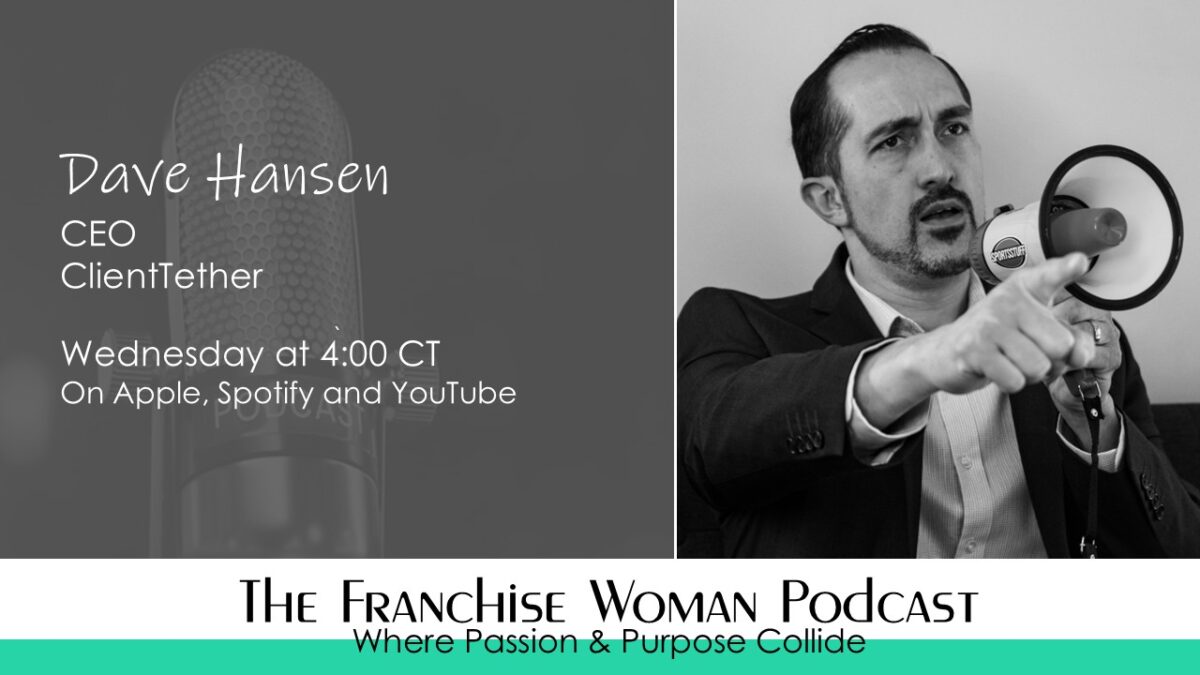
In a recent episode of The Franchise Woman Podcast, Rebecca Monet, CEO and Chief Scientist of Zorakle Profiles, spoke with Dave Hansen, CEO of ClientTether, about the intersection of sales systems, automation, candidate psychology, and human connection.
Their conversation pointed to a better model for franchise development. Automate what is repeatable. Personalize what is consequential. Keep fit at the center of the decision.
A Franchise Sale Begins a Long-Term Relationship
Franchise development is often discussed in the language of funnels, conversions, lead costs, and close rates. Those measures matter, but they can also make the process sound more transactional than it really is.
A signed franchise agreement is not the end of the relationship. It is the beginning of one that will typically last at least a decade and may continue through multiple renewals.
Dave compared the consequences of choosing a franchise partner to the consequences of choosing a spouse. The analogy is intentionally direct. Both decisions create a long-term relationship, ongoing expectations, shared responsibilities, and significant consequences when the fit is wrong.
That changes the questions a franchisor should ask.
The objective cannot be limited to whether a candidate has sufficient capital, expresses enthusiasm, or can be moved through the process. The franchisor must also consider whether the candidate can execute the model, operate within the culture, respond well to coaching, represent the brand, and remain productive when the realities of ownership replace the excitement of exploration.
When development teams view candidates as future partners rather than units to be awarded, the entire process becomes more deliberate.
More Leads Are Not Necessarily Better Leads
One of the most persistent pressures in franchise development is the demand for greater lead volume. Marketing teams can readily report the number of leads generated and the cost associated with each one. Lead quality is harder to quantify, so quantity often becomes the default measure of success.
Dave challenged that assumption. In his experience, some of the strongest brands do not necessarily generate the most leads. They generate better-matched leads who are more likely to engage, qualify, convert, and ultimately succeed.
The distinction matters because every poor-fit lead consumes time. Someone must respond, follow up, schedule calls, answer questions, and determine whether the candidate should proceed. A larger funnel filled with poorly aligned prospects can create more activity without producing better results.
The greater opportunity is to connect candidate insight with marketing and development strategy. If a franchisor understands the characteristics of its best franchisees, it can use that knowledge to sharpen its messaging, targeting, qualification, and discovery process.
The goal is not simply fewer leads. It is a more relevant pool of candidates and a clearer way to recognize the people who belong in the system.
Use Automation Where the Work Is Repeatable
Franchise development teams are frequently understaffed. One person may be responsible for initial outreach, qualification, scheduling, discovery calls, follow-up, document delivery, and moving every candidate through the pipeline.
This is where automation provides real value.
At the top of the funnel, activity is both high-volume and relatively consistent. Teams need to acknowledge inquiries, attempt contact, deliver basic information, nurture interest, qualify prospects, and schedule initial conversations. When those steps are standardized, they can be automated effectively.
Automation can also support defined milestones later in the process. It can assist with FDD delivery and reminders, send an assessment at the appropriate stage, or coordinate introductions for franchisee validation.
Dave’s caution is important, however. A team cannot effectively automate a process it has not defined. Technology magnifies the process behind it. If the underlying workflow is unclear or inconsistent, automation may simply help the organization execute a weak process faster.
The first task is to identify the desired behavior and establish the best practice. The next task is to automate the portions that are consistent and repeatable.
The Deeper the Candidate Goes, the More Human the Process Should Become
The appropriate level of automation changes as a candidate advances.
Early in the process, automation can handle broad communication and administrative tasks. After the initial conversation, messaging can become more specific based on what the development professional has learned. As the candidate approaches a decision, the conversations become more personal, nuanced, and consequential.
At that point, the human role should expand.
The development professional needs space to understand the candidate’s aspirations, concerns, capabilities, decision style, and expectations. The candidate needs the opportunity to ask difficult questions, test assumptions, and determine whether the reality of the model matches what they want from ownership.
This is the central purpose of good automation. It is not to remove people from franchise development. It is to remove repetitive work so people can spend more time doing what requires judgment, curiosity, empathy, and trust.
Candidate Psychology Has Changed
Rebecca and Dave also discussed a shift that many franchisors are noticing. Candidates may appear more cautious, less decisive, or more reluctant to take risk than prospects from earlier generations.
It is easy to label this as a lead quality problem. Dave suggested that it may be more accurate to view it as a psychographic shift.
Candidates shaped by different cultural, economic, and generational experiences will not all respond to the same sales approach. Some may need more education, transparency, peer examples, and social proof before they feel confident moving forward. A hard close may not create momentum. It may repel an otherwise viable candidate.
This does not mean every cautious candidate should be awarded a franchise. It means risk tolerance must be interpreted in context.
A person who is naturally risk-aware may perform well in a highly structured, operationally focused concept with strong consumer marketing. That same person may struggle in a business that requires the owner to build a market through persistent business-to-business selling.
The relevant question is not whether risk aversion is universally good or bad. The question is whether the candidate’s natural tendencies align with the work the business actually requires.
Personalization Requires More Than Demographics
Many sales systems segment candidates according to demographics or lead source. Those data points can be useful, but they do not reveal how someone thinks, what motivates them, how they make decisions, or what type of reassurance they may need.
Psychographic insight allows a franchisor to engage candidates more intelligently. One candidate may respond to evidence and detailed information. Another may be influenced by peer stories and a sense of community. Another may want a direct explanation of the opportunity, expectations, and path forward.
The franchise development process still needs structure and consistency. Personalization does not mean ignoring the process or changing the standard for qualification. It means communicating the relevant information in a way the individual can understand and use.
When a franchisor combines a defined process, intelligent automation, and objective candidate insight, personalization becomes scalable without becoming impersonal.
AI Needs Guardrails
AI can support franchise development, particularly in the high-volume activities at the top of the funnel. It can help with engagement, responsiveness, and workflow efficiency. But franchise sales operate within a regulated environment, and AI-generated communications must be carefully controlled.
Dave emphasized the need for proper training and guardrails. An AI tool cannot be allowed to make promises, commitments, or financial claims that conflict with the FDD or the organization’s approved practices.
The broader principle is simple. AI should support a well-designed process under human oversight. It should not be treated as an unsupervised substitute for compliance, judgment, or relationship-building.
Build for the Buyer Who Is Coming Next
The next generation of franchise owners may bring different expectations to the discovery process. They may evaluate risk differently, seek more evidence, expect faster communication, and require a clearer understanding of the support surrounding them.
Franchisors have two responsibilities in response.
First, they must build development processes that educate and engage candidates effectively. That includes useful content, transparent communication, relevant proof, timely follow-up, and enough personal interaction to build trust.
Second, they must remain disciplined about fit. A better candidate experience should not lower the standard for franchisee selection. It should make the standard clearer and help both parties reach a more informed decision.
The strongest franchise development strategy will not rely on technology alone or human instinct alone. It will combine reliable systems with meaningful conversations and objective insight.
Technology can ensure that no lead is forgotten. Data can help reveal what may not be obvious in an interview. Experienced people can interpret the information, explore the candidate’s goals, and decide whether a long-term partnership makes sense.
That is how franchisors move beyond simply closing more deals. They create relationships with franchisees who can embrace the model, contribute to the culture, perform well, validate positively, and grow with the brand.
Continue the Conversation on September 10
The podcast conversation raises an important question for every franchise development team: Has your strategy changed as much as the buyer has?
Dave Hansen and Rebecca Monet will explore that question in greater depth during FranDev 2.0: Upgrade Your Strategy for a New Kind of Buyer, a live webinar on Thursday, September 10 at 12:30 PM ET.
They will discuss changes in candidate behavior and expectations, where franchisors may be losing momentum, how messaging and engagement can evolve, and how teams can identify stronger-fit candidates earlier and move the right people forward with greater confidence.
Register for the webinar: https://us02web.zoom.us/meeting/register/jd8-m0EwQ7KuNxXBQaITag